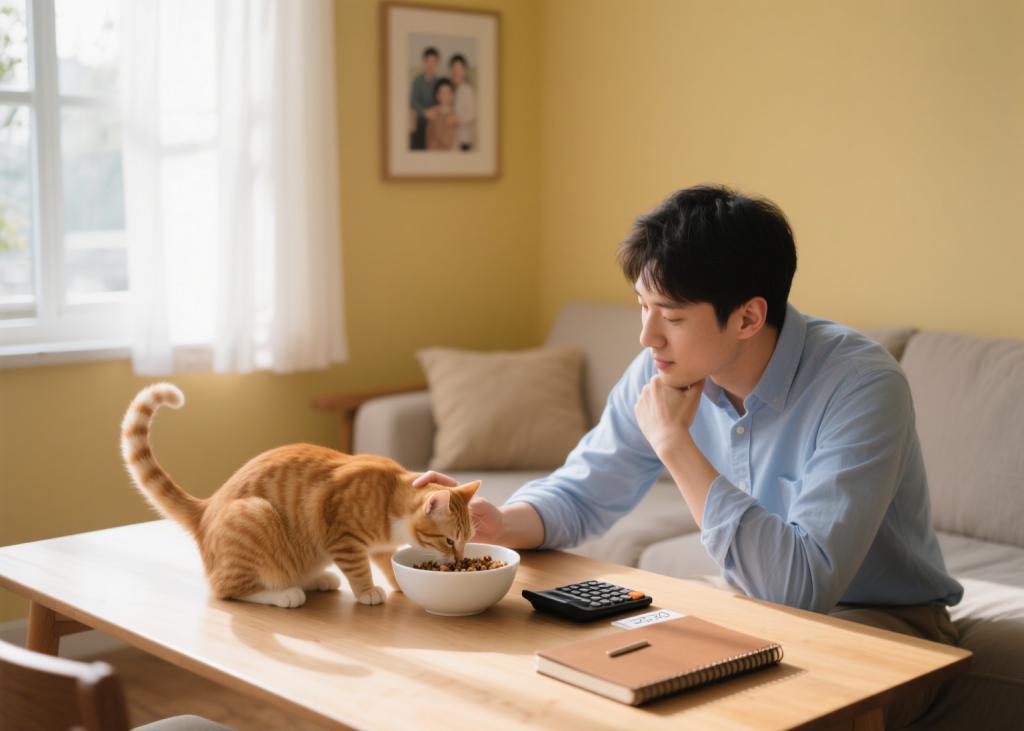
Living in a modern flat offers many comforts, but for our feline friends, it often means a more sedentary lifestyle. If you’ve noticed your cat getting a bit “round” lately, you might be wondering: does my cat really need this much food? Implementing a proper apartment cat weight management strategy is crucial because indoor cats typically burn significantly fewer calories than those with outdoor access.
Table of Contents
The Reality of Low-Activity Living
In a small apartment, the opportunities for a “grand zoomie” are limited. Unlike outdoor cats that hunt, climb trees, and patrol large territories, apartment cats spend the majority of their time lounging in sunbeams or walking short distances between the food bowl and the litter box.
Because of this limited physical output, the risk of feline obesity skyrockets. Obesity isn’t just an aesthetic issue; it leads to diabetes, joint pain, and a shorter lifespan.
How Many Calories Does an Apartment Cat Actually Need?
Most veterinarians agree that a typical indoor cat needs about 20 to 25 calories per pound of body weight to maintain a healthy size. However, for apartment cat weight management, you may need to lean toward the lower end of that scale.
If your cat is already overweight, simply “free-feeding” (leaving a bowl of kibble out all day) is the biggest obstacle to health. Transitioning to scheduled mealtimes allows you to control the exact caloric intake.
Top Strategies for Managing Weight in Small Spaces
1. Ditch the Bowl for Puzzle Feeders
One of the best ways to kickstart your apartment cat weight management plan is to make your cat “work” for their food. In the wild, cats are hunters. In an apartment, they are “bowl-waiters.” Using a slow feeder or a food puzzle forces them to move their paws and brain, burning extra calories during mealtime.
2. Utilize Vertical Space
You don’t need a massive floor plan to get your cat moving. By installing wall-mounted shelves or tall, slim cat trees, you encourage jumping and climbing. This “vertical cardio” is essential for burning off that extra pouch.
3. Interactive Play Rituals
Five minutes of intense play with a feather wand is more effective than an hour of the cat batting at a stationary toy. Aim for two 10-minute high-intensity play sessions per day to keep their metabolic rate high.
Is It Time to Switch to “Indoor” Formula Food?
Many brands offer “Indoor” or “Weight Care” formulas. These are generally lower in fat and higher in fiber to help your cat feel full while consuming fewer calories. When adjusting their diet, always do it gradually over 7-10 days to avoid digestive upset.
Conclusion
Successful apartment cat weight management is about balancing intake with creative movement. By monitoring calories and maximizing the three-dimensional space of your home, you can ensure your cat stays lean, mean, and healthy—no matter how small your square footage is.